How Setting Up Your Space Correctly Benefits Your Lesson
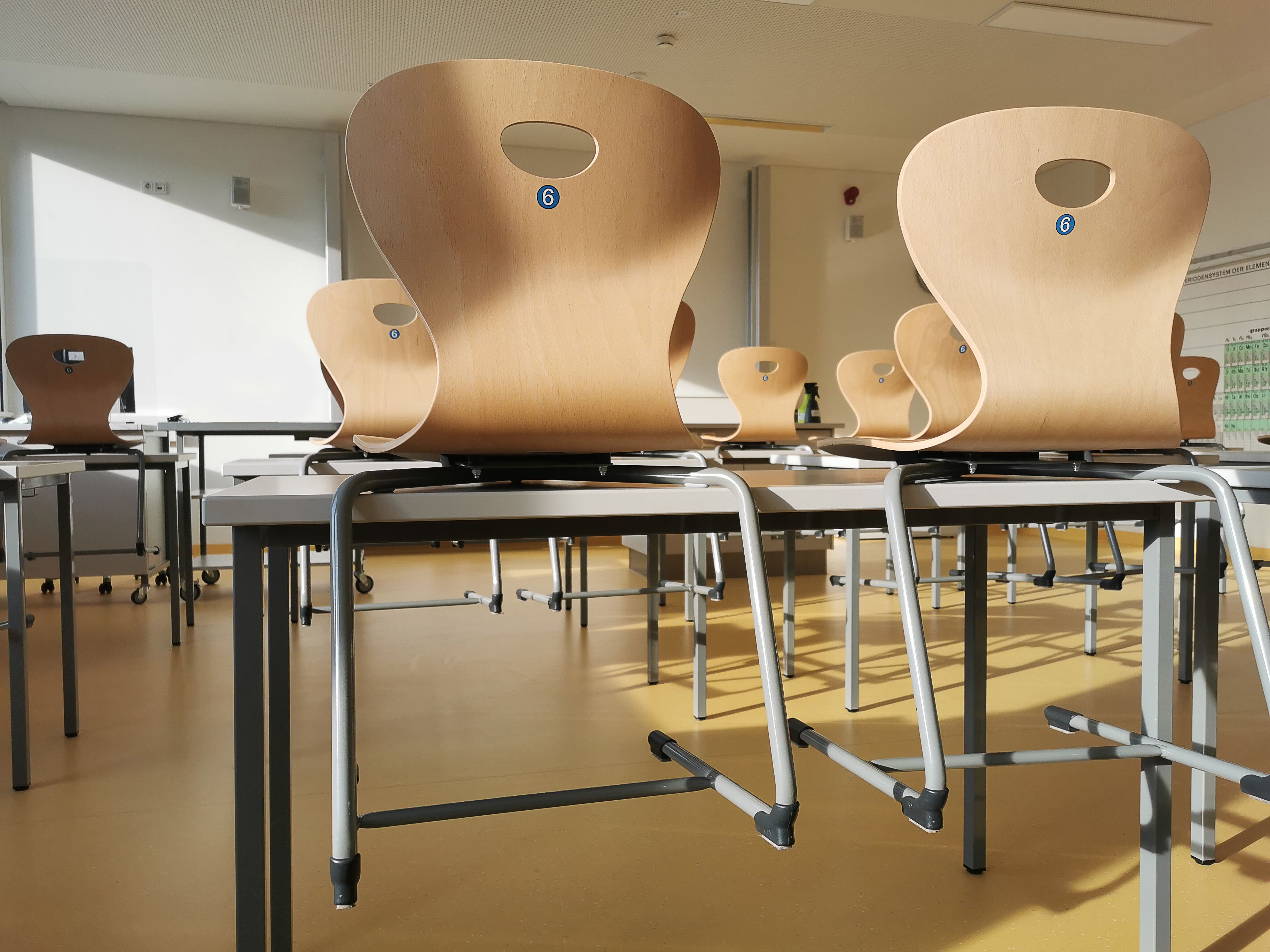
Whether you teach a class or run a workshop, the room is part of your lesson plan.
Have you ever planned the perfect activity and watched it fall flat? It may not have been you, the students or the plan. It may have been the room. One study followed 3,766 pupils across 153 classrooms and found that the physical features of the room explained 16% of the differences in their learning progress over a year (Barrett et al., 2015). Below are four things you can influence in most rooms: seating, light, air and sound.
Which classroom seating arrangement works best?
School classrooms do not always allow for flexibility. Teachers often do not have their own room and have to migrate between homerooms, and the desks are heavy and full of materials. Still, never assume that the setting you get is the one and only final form.
Sometimes the seating arrangement works against our best intentions. Islands make collaboration easy, and they make chatting easy too, which is a problem when pupils should be focusing on an individual assignment. Rows suit individual work. In one study of 53 lessons, a semicircle got more pupils asking questions than rows did, where mostly a few of those sitting in the “action zone” did the talking (Marx, Fuhrer & Hartig, 1999). A review of eight studies found that rows improve focus on individual tasks, and that disruptive pupils gain the most from them (Wannarka & Ruhl, 2008). So let the task choose the layout: rows for a test, islands for a group project, a semicircle for a discussion or a demonstration.
Train your students. As Pavlovian as it might sound, getting them into the habit of rearranging furniture quietly, quickly and in an organized way is a routine to teach from the get-go. Start at the beginning of the year, keep the instructions short, repeat them and stay consistent. Do not give up if it gets messy.
The borders of a classroom are fixed. What happens within those borders is up to us.
How natural light improves learning
What many people label as a cosmetic, nice-to-have feature carries much more weight than they would assume. In the same study, the overall naturalness of a room, which covers light, temperature and air quality, accounted for about half of the 16%, and light alone for around a fifth of it.
For a trainer, this shows up at 2 pm. A room lit only by fluorescent tubes feels very different at 10 am and after lunch. Open the blinds fully, move seats closer to the windows, and avoid placing the screen where the glare hits it.
Does opening the windows help students learn?
Letting air in matters. In a project in Barcelona, pupils built their own CO2 meters, small computers that alert them when the CO2 level in the classroom rises. Teachers reported that even a small action like opening a window had a big impact on how students participate. Research points the same way: in a summary of 11 studies, eight found that better ventilation improved performance, and CO2 in classrooms was often twice the recommended 1,000 ppm. If you have no meter, use a rule of your own: windows open during every break, and again when the room starts to feel heavy.
How to soundproof a classroom and reduce echo
In School of Rock, one of Jack Black’s first missions with the unaware children is to soundproof the classroom. Unwarranted music lessons should not be the only reason to do it, especially where privacy matters. Noise also costs attention: in a study of English listening comprehension, traffic noise lowered scores, and the students noticed it even more than the scores showed (Chen & Ou, 2021).
Soundproofing keeps sound from passing through walls and doors. Echo reduction softens the sound inside the room. The cheapest fix for the first is sealing the door: a simple door sweep or weatherstripping closes the gap that sound leaks through, and it often beats expensive panels. For the second, soft surfaces do the work. A rug, heavy curtains or even moving blankets hung on a wall absorb reflections without any renovation. Clap once in the middle of the room: if you hear a ringing flutter, the room needs more soft surfaces. A bookcase or a corkboard on a bare wall helps too. These fixes reduce the problem without removing it, which is usually enough.
Our training rooms at Vice Versa Academy in Prague
In our Academy in Prague 7, where we offer rooms for rent, we have big windows with natural light from the terrace and plants to improve the ambiance. The desks and chairs are light and portable, which allows us to change the setting within a short while, and the carpet softens footsteps and echo. The room we use for coaching or therapy has a warm orange color and more of a living room vibe, with a view of a sunny terrace.
Whether you rent a room like ours or teach in a classroom you cannot change, start with one small adjustment. Move the desks, open a window, hang a blanket on a bare wall. And if you are looking for a room in Prague 7 for coaching, therapy or a workshop, ours are available to rent. Get in touch and come see them.