Lessons from Prague: Teaching English Grammar Through Art
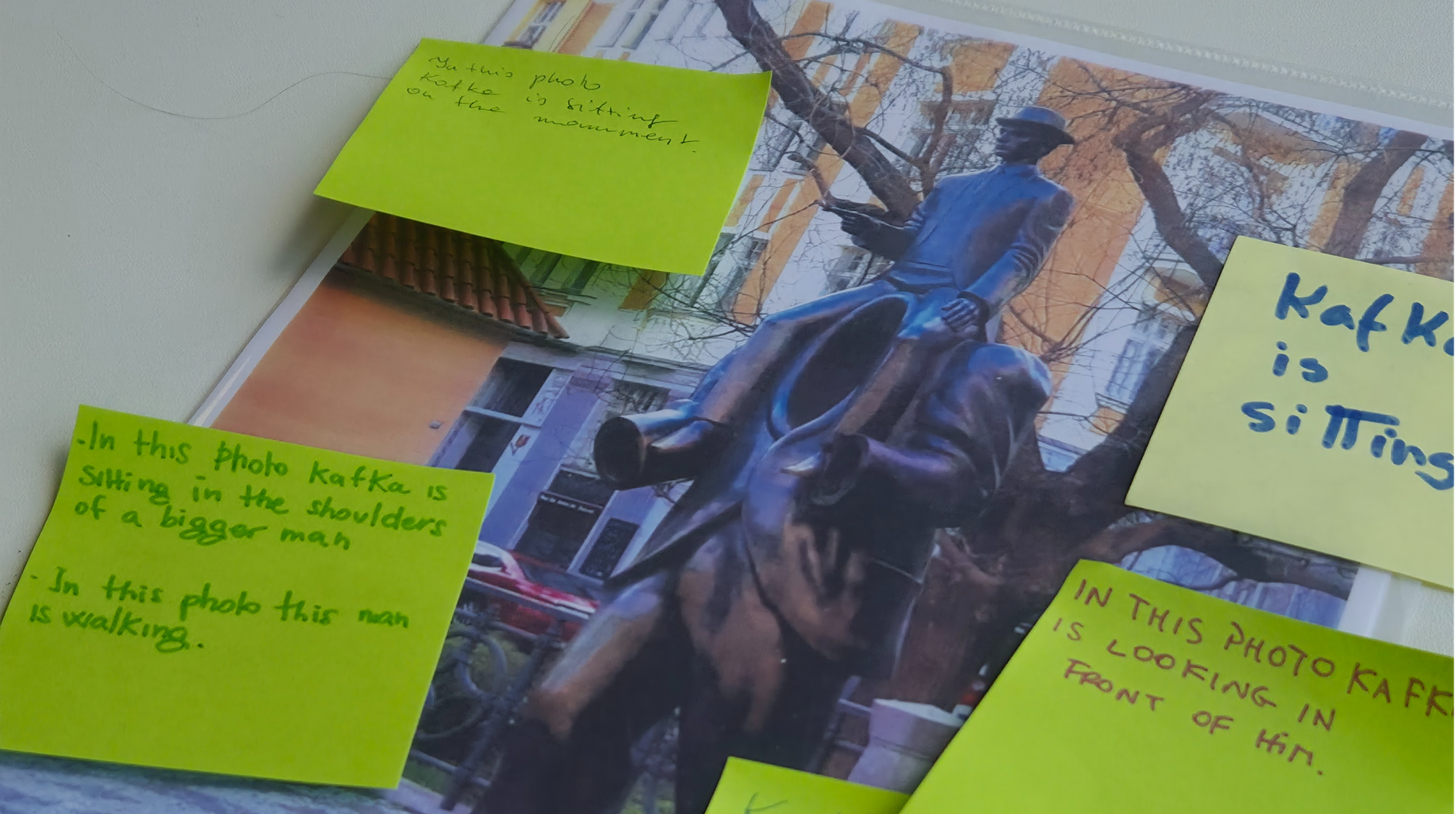
Students rarely fall in love with grammar. So here in Prague, we asked: can they? And this city solved it for us. It is full of art practically begging to be used to turn grammar into a blend of art and creativity.
The Activity: The Present Continuous Through Sculpture
Photograph statues and fountain figures around your city: anything mid-gesture, mid-fall, mid-dance. Hang the prints around the classroom. Students wander from image to image, sticking post-it notes with what they see happening on them: "She is reaching.", "He is about to fall." Someone always argues over whether a figure is running or escaping. The lesson is fun and alive.
Why It Works
You’ll quickly see the benefits. As they move around the room, students read each other's notes. This is great for peer learning. This format also includes movement which is helpful especially to learners who hate traditional grammar work. And since they're describing real art from a town they know and love, the language point gets used in the moment, in context, and not just as an abstract rule.
Beyond Tenses
This concept, of course, isn't limited only to the present continuous, or even tenses. Swap in different art forms, such as paintings, photographs, or classroom objects, and the same format can be repeated or adapted to practice almost any grammar point. And here’s the best thing: for more outdoor time, you can turn this into an actual walk (or a treasure hunt)!
Why Prague?
We could teach this lesson with any photos, really, but Prague keeps making the case for itself. When you see the early morning mist rising off the Vltava river as the first tram crosses the bridge, Charles Bridge nearly empty before the crowds arrive and its baroque statues catching the first light, or the view from the Prague Castle at sunset, with red rooftops stretching toward the neighborhoods across the river, you realize we all have something to learn from a city like this.
Thank you for subscribing!
Have a great day!