We have all been wired to learn through one thing. And no, it’s not an iPad
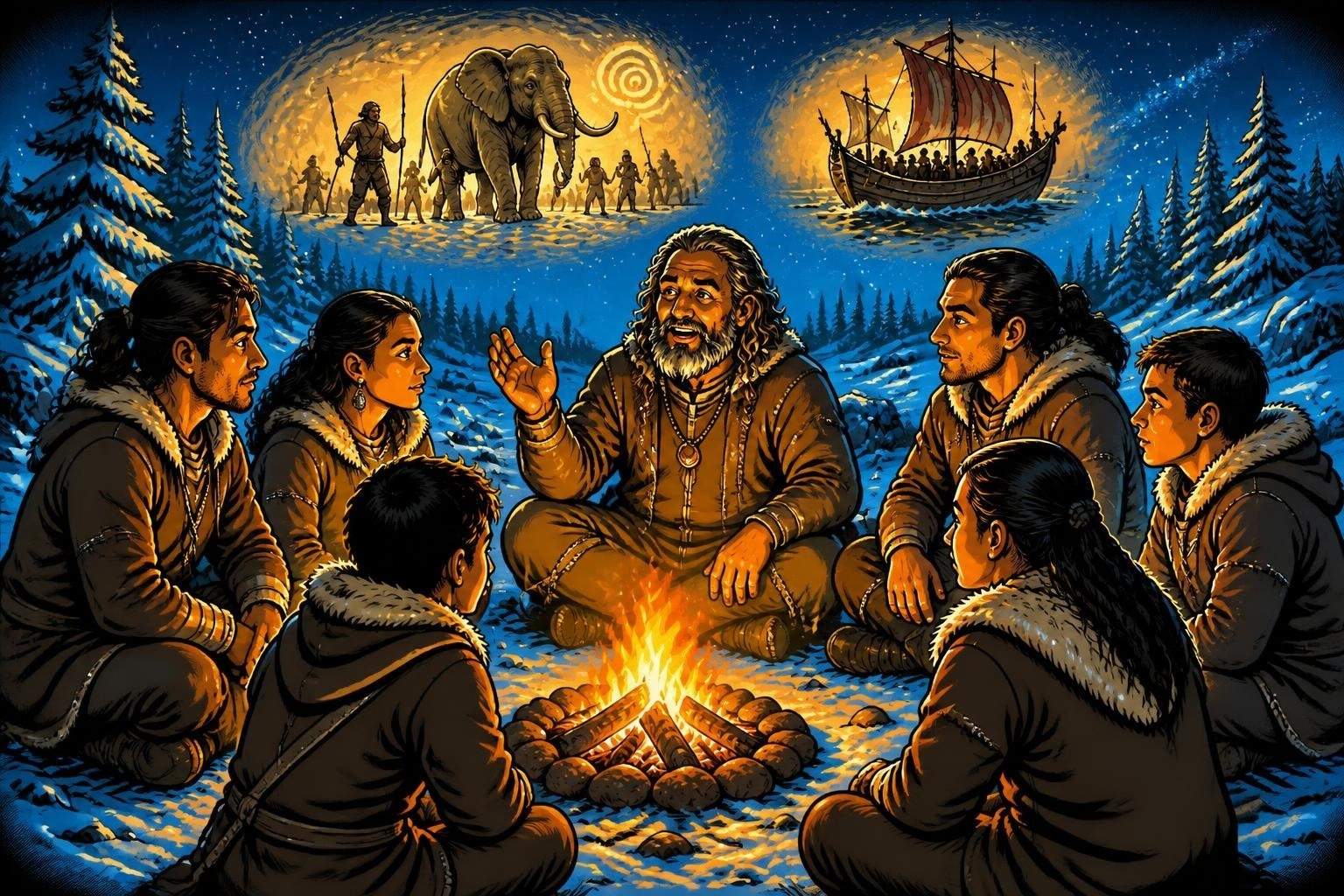
It is common knowledge that the most natural way to learn is by doing, whether you are changing a tire, working out the laws of physics, or becoming more athletic. But what if we are learning about abstract ideas, specifically social norms, values, and sets of rules?
As it turns out, our brains have been conditioned by thousands of years of evolution to respond to a single most effective technique: stories. For abstract experience, the kind you can't physically touch, a story is the doing.
We are what we say
As of today, up to 65% of what a person says in a single day, regardless of location, age, or gender, is gossip and stories about other people. This basically means storytelling is the backbone of our social interactions and human bonding itself. What chimpanzees do with grooming, humans do with telling stories (including the ones about your annoying coworker).
Why do our brains crave stories?
First of all, storytelling was one of the forces that kept social groups together, ultimately increasing their chances of survival. If storytelling wasn't crucial for survival, it would have surely been replaced by something more efficient. Communities that survived often did so by fostering larger numbers, and stories were the natural social glue: what started as legends and myths turned into sets of norms and values that hold a community together.
Moving to an individual brain, stories are the only natural product of our minds when dealing with an experience happening in time and place we didn't live. For instance, imagining what your grandfather went through in a war, or picturing what would happen if the harvest failed this year — your brain has no other format for this. It cannot hand you a fact sheet about someone else's actions through time. It can only hand you a story.
Storytelling and education
Over time, we became so used to storytelling that stories now activate our emotions, our centers of pleasure, which is exactly what makes learning through them more effective. In other words, if 65% of what we naturally talk about is narrative, then a lesson that isn't one is an uphill battle. As teachers, we are either offering a story or asking students to override their own nature in order to listen to us. And offering a story is by far the more effective option. I still remember, how electrons fill out an orbital, and all because of how my chemistry teacher explained it. He said that when electrons arrive at an orbital, they first take the empty double seat, because they don’t wanna deal with strangers, just like people on a bus.
The easiest way to include more storytelling in your own lessons are storyboards. They're well known among language teachers, but they're just as powerful a tool in any subject — and they're easy to put together with generative AI. So next time you reach for the iPad to keep them engaged, reach for a story instead.